
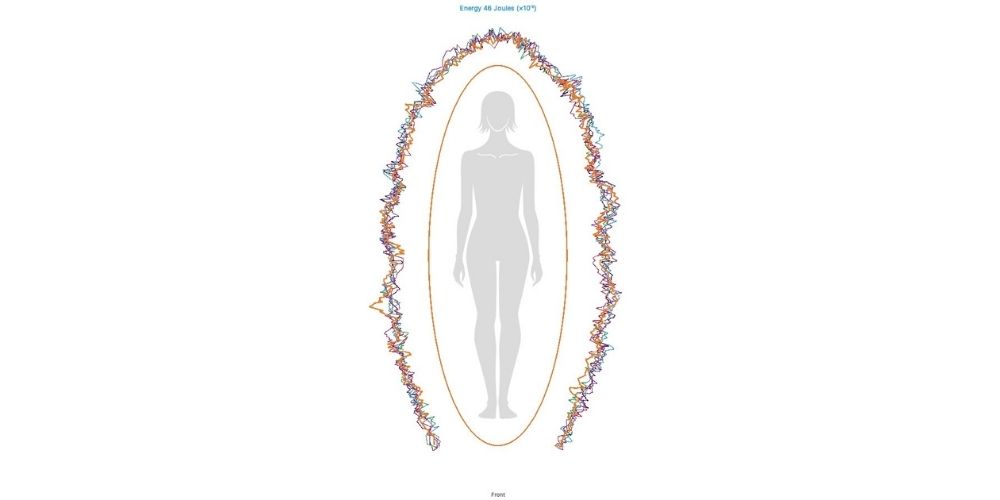
Introduction
Most people think of the body as chemical.
Hormones. Vitamins. Neurotransmitters. Minerals.
And while chemistry is essential, there’s another layer that is just as important — and often overlooked.
Your body runs on electricity.
Every heartbeat, every thought, every muscle contraction, every sensation travels through tiny electrical signals. Without them, nothing moves. Nothing communicates. Nothing functions.
This isn’t abstract or mystical. It’s measurable biology.
Understanding the body as an electrical system changes how we think about energy, fatigue, stress, healing, and even aging. It shifts the focus from “What chemical am I missing?” to “Is my electrical system flowing properly?”
Let’s explore what that really means.
What Does “The Body Is Electric” Mean?
At its core, electricity is movement of charged particles.
Inside your body, those particles are primarily:
- Sodium
- Potassium
- Calcium
- Magnesium
These minerals carry electrical charge. When they move across cell membranes, they create voltage.
That voltage allows:
- Nerves to send signals
- Muscles to contract
- The heart to beat rhythmically
- The brain to process information
In simple terms:
Your cells act like tiny batteries.
Without charge, they cannot communicate.
Your Nervous System: The Wiring Network
The nervous system works like an advanced communication network.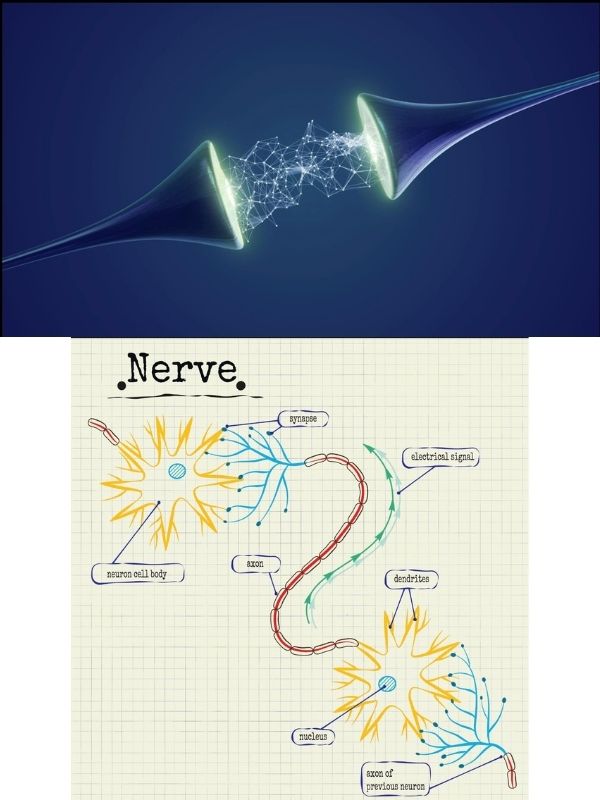
Electrical impulses travel along nerves in milliseconds. These signals tell your muscles when to move and your organs how to function.
This electrical signaling is called an action potential — a brief shift in voltage across a cell membrane.
When this process flows smoothly:
- Reflexes are sharp
- Thinking is clear
- Coordination feels effortless
When electrical signaling becomes dysregulated, people may experience:
- Brain fog
- Fatigue
- Mood shifts
- Slower reaction times
The body may still look “normal” on standard tests — but the signaling efficiency can be reduced.
Before the heart pumps blood, it fires electricity.
The Heart: An Electrical Organ First
The rhythm begins in a specialized group of cells called the SA node — often referred to as the heart’s natural pacemaker.
This electrical impulse spreads through heart tissue and triggers contraction.
That’s what an ECG measures: electrical activity.
If the electrical signal is disrupted, the mechanical pump becomes irregular.
This shows something powerful:
Electricity directs function.
Chemistry supports it — but voltage initiates it.
Cells, Membranes, and Voltage
Every cell maintains a small electrical charge across its membrane. This is called membrane potential.
Think of the membrane as a gatekeeper.
When the membrane is healthy:
- Nutrients move efficiently
- Waste exits smoothly
- Energy production runs optimally
Research suggests that when membrane voltage drops, cellular performance may decline. Cells can become less efficient at producing energy.
Over time, this may influence how resilient we feel.
This is one reason why mineral balance, hydration, and membrane integrity matter more than we often realize.
Why Modern Life Can Affect Electrical Balance
Your electrical system depends on:
- Proper mineral intake
- Hydration
- Oxygen availability
- Sleep cycles
- Nervous system regulation
Chronic stress may alter electrical signaling.
Dehydration reduces conductivity.
Poor sleep disrupts neural communication.
Over time, the system can shift from coherent signaling to scattered signaling.
This doesn’t mean something is “broken.”
It means the system may need support.
The Bigger Perspective
When we understand the body as electrical, several concepts become clearer:
- Why electrolytes influence energy
- Why grounding and light exposure are being researched
- Why nervous system regulation matters
- Why mitochondrial health is associated with vitality
It reframes health as signal quality, not just chemistry.
The question becomes:
Is your body’s communication system clear and coherent — or noisy and depleted?
Conclusion
Your body is not just a biochemical machine.
It is a dynamic electrical network.
Electricity allows cells to talk.
Cells talking allows systems to function.
Systems functioning create health.
This perspective doesn’t replace chemistry — it deepens it.
And it opens the door to a new conversation:
If the body is electric…
How do we protect, restore, and optimize that electrical charge?
That is where this discussion truly begins.
1. Hodgkin, A. L., & Huxley, A. F. (1952).
A quantitative description of membrane current and its application to conduction and excitation in nerve.
The Journal of Physiology, 117(4), 500–544.
→ Foundational research describing how electrical impulses travel along nerves.
2. Alberts, B. et al.
Molecular Biology of the Cell (latest edition). Garland Science.
→ Comprehensive explanation of membrane potential, ion channels, and cell signaling.
3. Hille, B. (2001).
Ion Channels of Excitable Membranes. Sinauer Associates.
→ Detailed overview of how sodium, potassium, calcium, and other ions generate electrical activity.
4. Wallace, D. C. (2012).
Mitochondria and cancer. Nature Reviews Cancer, 12, 685–698.
→ Discusses mitochondrial bioenergetics and cellular function.
5. Lane, N. (2015).
The Vital Question: Energy, Evolution, and the Origins of Complex Life. W.W. Norton.
→ Accessible explanation of how cellular energy systems shape life.