
Introduction
If the body is electric…
And if frequency influences biology…
Then what role do emotions play?
Modern research in neurocardiology and psychophysiology suggests something fascinating:
Your heart and brain are in constant communication.
And your emotional state directly influences that conversation.
This is not poetic language. It is measurable physiology.
Patterns in heart rhythm change depending on how we feel. These patterns influence the autonomic nervous system — the system that regulates heart rate, digestion, breathing, and stress responses.
Understanding heart–brain coherence may help explain why emotional awareness is not just psychological — it is biological.
Let’s explore how.
The Heart and Brain: A Two-Way Conversation
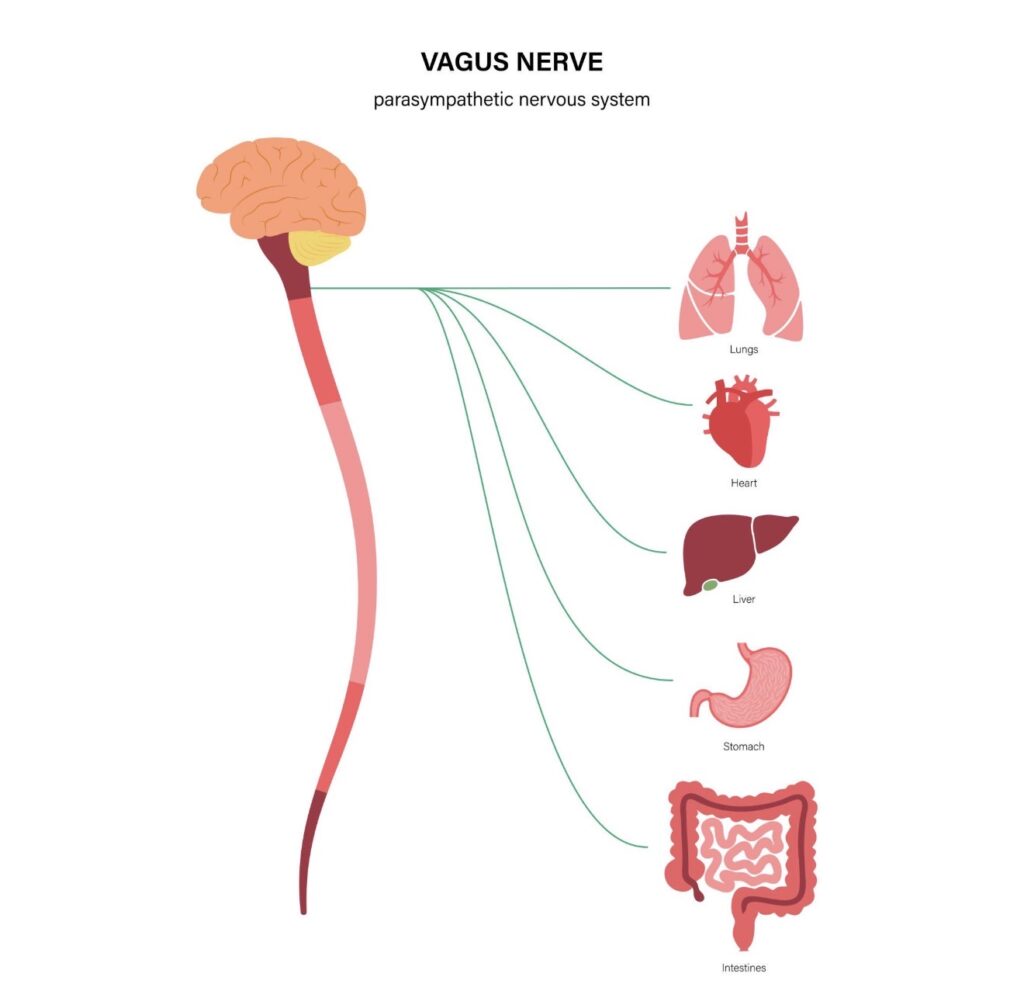
Research from the HeartMath Institute suggests that communication between the heart and brain is dynamic and bidirectional.
In fact, the heart sends more signals to the brain than the brain sends to the heart.
These signals travel primarily through the Vagus nerve and influence:
- Emotional processing
- Attention
- Decision-making
- Stress response
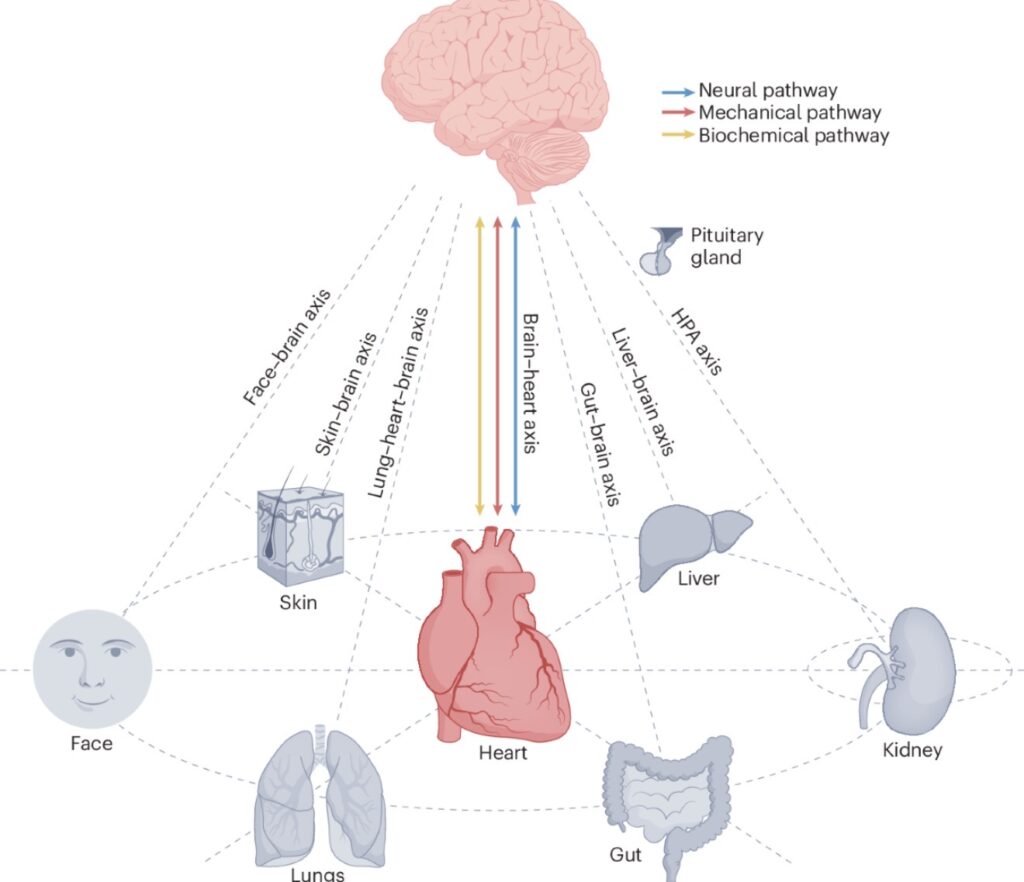
The heart generates the body’s largest measurable electromagnetic field. Changes in emotional state alter heart rhythm patterns — and these rhythm patterns influence brain function.
This measurable pattern is called heart rate variability (HRV).
When rhythms are smooth and coherent, the nervous system tends to function more efficiently.
When rhythms are chaotic, stress physiology often increases.
The Autonomic Nervous System and the Amygdala
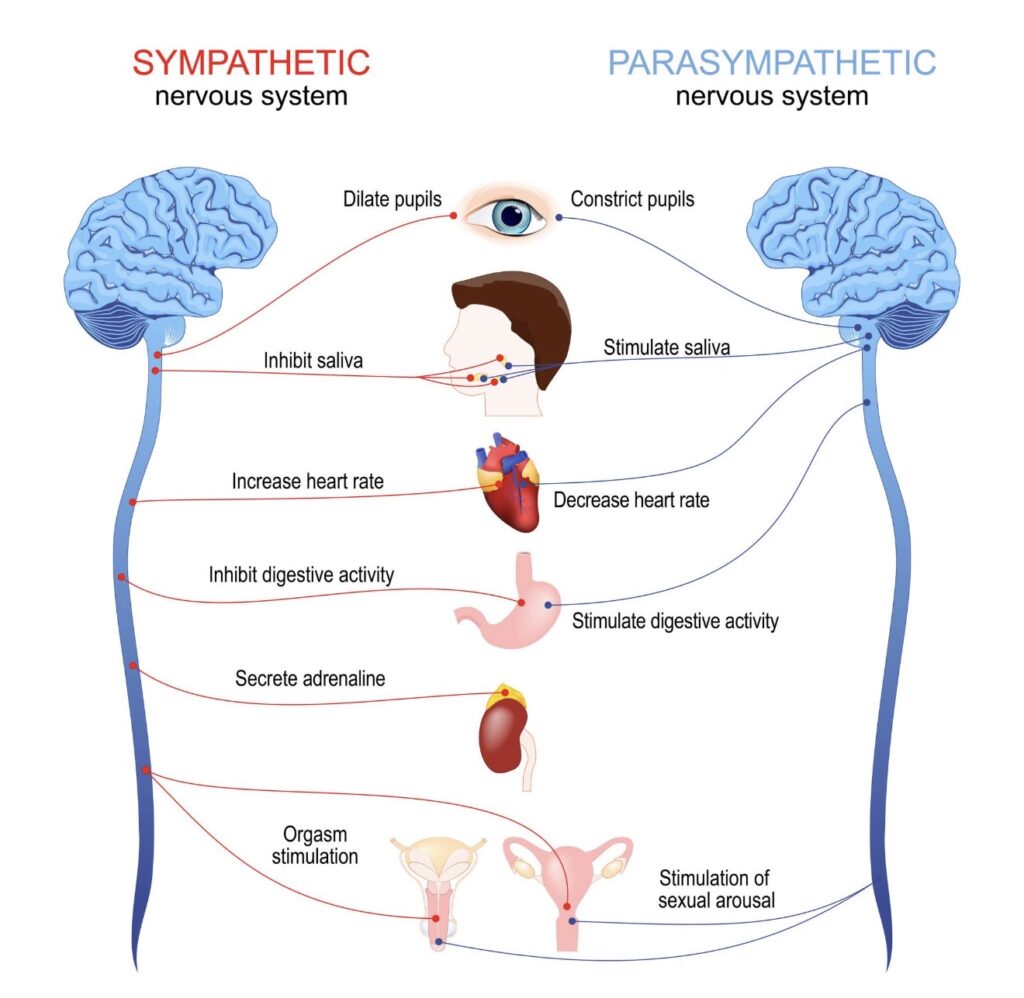
The autonomic nervous system has two main branches:
- Sympathetic (fight or flight)
- Parasympathetic (rest and regulate)
The amygdala, a small almond-shaped structure in the brain, plays a central role in emotional processing — especially fear and threat detection.
When the amygdala perceives danger (real or imagined), it activates stress physiology:
- Increased heart rate
- Release of stress hormones
- Heightened alertness
This response is protective.
But when stress becomes chronic, the system can remain in prolonged activation.
Emotions are not “just feelings.”
They are neurological events that shape autonomic patterns.
Heart–Brain Coherence: What It Means
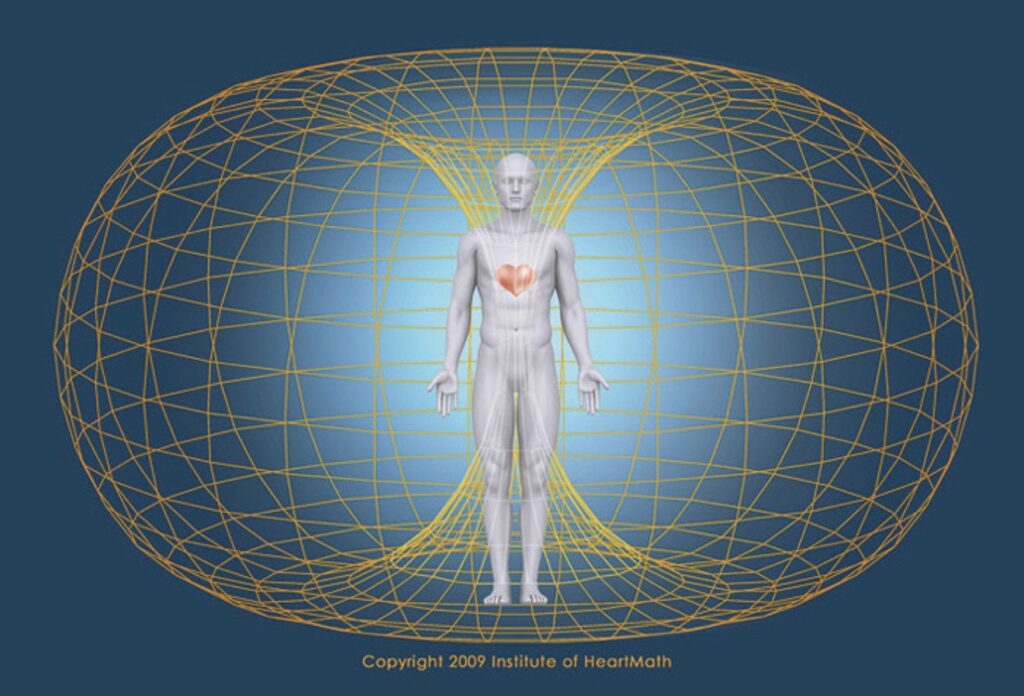
If the body is electric…
If frequency influences biology…
Then emotional states may represent internal frequency patterns.
Not mystical frequencies — but measurable physiological oscillations.
Your emotions shape your autonomic nervous system.
Your autonomic nervous system shapes your biology.
And awareness allows intervention.
Conclusion
Heart–brain coherence is not about forced positivity.
It is about awareness.
Feel the emotion.
Acknowledge it.
Regulate it.
The power lies not in avoiding anger or sadness — but in not living there.
When we become aware of our internal state, we gain the ability to shift our physiology intentionally.
And that may be one of the most powerful forms of self-regulation available to us.